Friday, June 24, 2022

Bulls return


Females, young seals gradually leave the beach

An other-worldly moan rises from the beach, warbling on the crisp wind. It’s a female elephant seal at Piedras Blancas. If it weren’t such a bright sunny day, I’d be creeped out.

Female seals usually bark, unlike the belching bellow of the males. But they are capable of variations on their vocal theme. Those yodels must mean something to them, as yet undeciphered by their human observers.

The crowd disperses

Most seals have vacated the south beach, but the seals still crowd the north end of the viewpoint. The adult females and juveniles of both sexes who are concluding their molt take little notice, but adult bulls are arriving, one by one. Soon they will dominate the beach.

It’s the usual summer transition. Time for the juveniles to return to the ocean for a few months. They’ll return in the fall for a few weeks rest, then spend the winter at sea, leaving the beach to the breeding seals.

Pregnant females

The females came into heat as they stopped nursing last season’s pups. They mated and the next pup got started, but in a process called delayed implantation, the embryo stopped developing after a few cell divisions. The females returned to the ocean for their annual short migration, from February or so to May.

That gives them a chance to regain some of the blubber they lost while nursing their pups. They stay on the beach with their pups during the birth and breeding season, not eating. They lose about a third of their body weight.

Adult females leave to spend the next seven months feeding at sea. They are pregnant with the next generation, and will return in winter to give birth.

Return of the bulls

Bulls are returning. It’s their turn to have the beach to themselves in July and August, while they molt their skin. The old brown and tan skin peels off in chunks, revealing the new skin underneath. New hairs are just beginning to grow, making the skin gray. As the hair grows, the color becomes brown.

The upper layer of skin is new, but old scars remain.

These two bulls are companionable on the beach during the summer molt. (Christine Heinrichs photo)

The adult bulls are the ones with the trunk-like nose that gives them their name. The nose, technically proboscis, and the chest shield, begin growing at puberty, when the seal is about five years old. They grow throughout the seal’s life, so chest shield and nose size are relative indicators of age.

Bulls don’t fight much during the summer. They may bellow at each other occasionally, but flipping sand is about the most activity on the beach in June. It’s a good time for summer visitors to observe them at rest.

This senior bull, with a large nose and chest shield, eyes the two younger ones sparring in the surf. (Christine Heinrichs photo)

Elephant Seal Visitor Center

Friends of the Elephant Seal celebrates the grand opening of its new, expanded visitor center in Cavalier Plaza, 250 San Simeon Avenue in San Simeon on July 16. Starting at 11 am, they’ll have a program of research and educational presentations, children’s story time, book signings, a Seal Science exhibit, new exhibits on how blubber keeps seals warm, seal anatomy, diet, and local predators. Guides will be available to answer questions. State Parks staff will lead a guided walk along the Boucher Trail, north of the viewpoint, which overlooks several more elephant seal beaches.
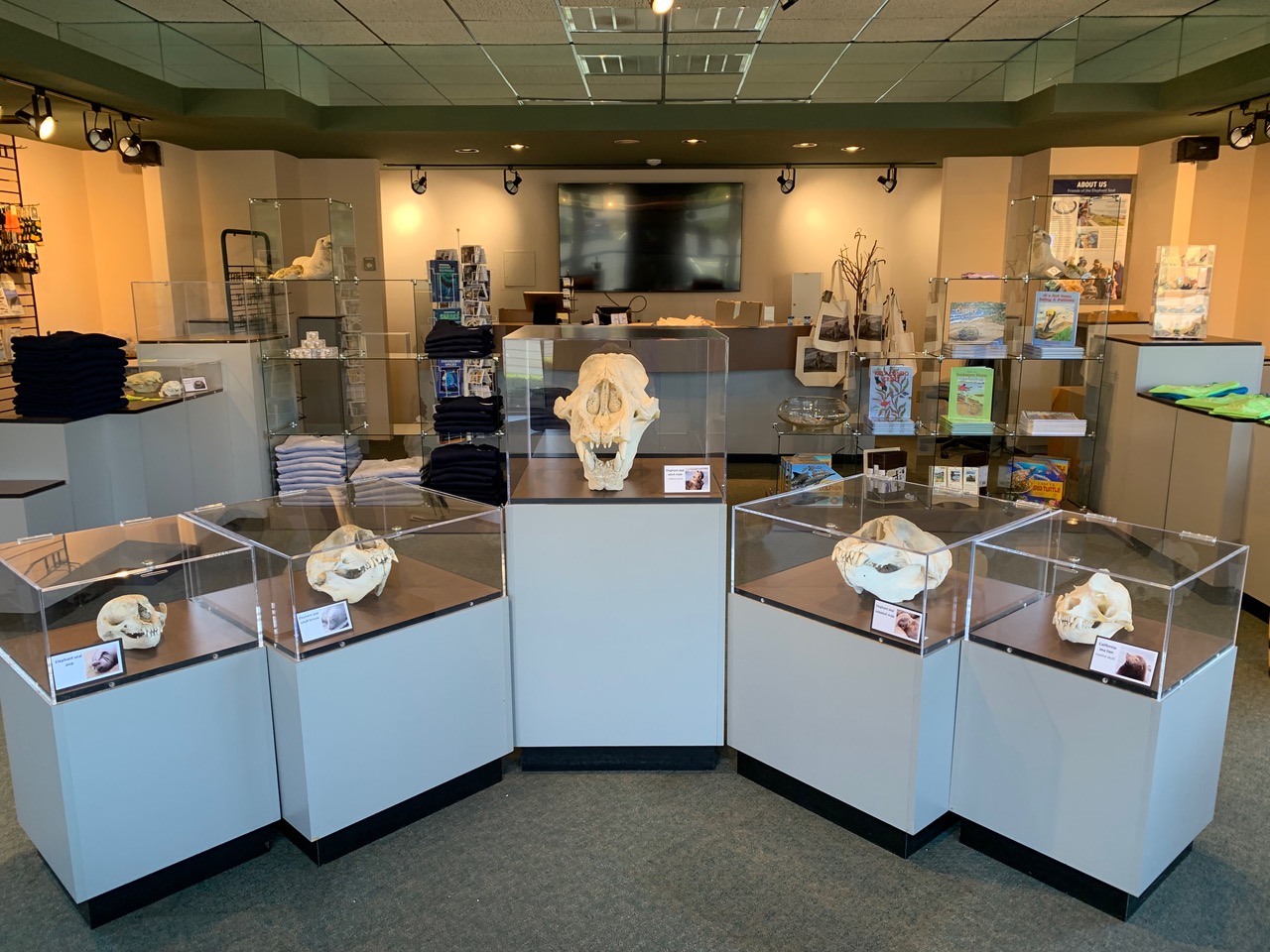
The center is open for visitors daily 10 am-4 pm. https://elephantseal.org/july16/


Friday, May 27, 2022

Welcome back!


Adult females and all juveniles return to the beach

More seals are on the beach in May at the Piedras Blancas elephant seal viewpoint than any other time of the year. Adult females, returned from their short migration, sleep. Juveniles, both male and female, have been out to sea all winter. They now fill out the beach crowd. Young males spar while their elders take advantage of the time to rest and all molt their skin.

Researchers marked M 92 and watched her give birth to her pup. They observed them until the pup was weaned. Then the pup got two white tags, so his appearance can be tracked. (Christine Heinrichs photo) 

Molting

The obvious change the seals undergo is molting their skin. The old brown skin and hair peels off in chunks, exposing new skin and hair underneath. Look for pearly gray seals next to brown and tan seals. Check out the ones with skin curling off around eyes and nose. Old scars also start peeling back the molted skin.

The process carries its own distinctive aroma, from all those mammals shedding skin on the beach. A few of the less thoughtful have orange feces smeared on their back ends.

Good thing the seals don’t defecate on the beach, or the smell would chase visitors off the boardwalk. It’s just a few outliers who add to the smell.

The seals stop foraging for food a day or two before they arrive, and don’t eat anything while they are on the beach. Their digestive and metabolic processes change. My observation is that arriving seals often defecate just before they arrive on the beach, leaving an orange bloom behind them.

Female migration

The females are undergoing changes as the egg that was fertilized back during the breeding season now implants in the uterine wall and begins to develop into an embryo. The process is called delayed implantation. After fertilization, the egg divides a few times and then pauses.

The process gives the mother time to restore her weight so that she is strong enough to carry the pregnancy to term.

Starting now, gestation takes about eight months. The females will leave the beach in a month or so. They will return in January, after their long migration, to have their pups.

Look for marks, other species

With research projects ramping up at Cal Poly and other locations adding marks, marked seals are more commonly seen on the beach. All marks are temporary, since they come off with the molted skin.

Other wildlife share the beach. A Guadalupe fur seal pup and a California sea lion pup hauled out on the beach recently. Every day brings different animals and birds to the viewpoint. The elephant seal viewpoint is easy to access but provides world-class wildlife viewing.

Monterey Bay National Marine Sanctuary is one of 15 that protect seascapes, wildlife and maritime heritage resources. Save Spectacular is the theme of the 50th anniversary.  (Douglas Croft photo NOAA)

The beach is within Monterey Bay National Marine Sanctuary. To celebrate 50 years of national marine sanctuaries, NOAA has compiled a series of Resource Collections. Peruse the many events, photos, lesson plans, maps, and other educational materials at https://sanctuaries.noaa.gov/50/?utm_medium=email&utm_source=GovDelivery. One covers Ocean Sound and Impact of Noise, https://sanctuaries.noaa.gov/education/teachers/ocean-sound/. The SanctSound Monitoring Project offers a portal that provides downloadable tools for comparing ocean sound, with six tutorials to help use the data.


Wednesday, April 27, 2022

Sealstack

April and May are the most crowded months on the beach at Piedras Blancas. All the adult females, over 5,000, plus juveniles of both sexes, arrive for their annual molt. It’s ideal seal watching for every possible variation in coat color and scientific markings.


No adult bulls, though. Some of the young males show signs of growing that distinctive nose, but they are at least two years away from adulthood. The mature bulls are on their post-breeding-season migration, foraging to regain the weight they lost. They may have gone as long as 120 days without food. Time to bulk up.

They feed along the continental shelf on the Canadian and Alaskan coastline. They will return in July and August, to molt their skin.

Molting

The expanse of brown, tan and gray animals looks indistinguishable at first, but let your eyes get accustomed to it. It’s like looking at jigsaw puzzle pieces, Gradually, contrasts emerge.

Shiny black seals just came out of the water. As they dry, their skin looks brown on their backs, tan on the underside. The seals undergo the process of a catastrophic molt once a year. As the old skin peels off, it reveals the new gray skin and brown coat beneath. The hairs of the coat just haven’t dried out and stood up yet. As they do, the coat acquires its brown color.


Compare how the molt happens on different seals. It starts around the eyes and other body orifices, and old scars. Some are pockmarked with scars from cookie cutter sharks, a small shark that bites, twirls around to take a distinctive circular plug of blubber, and leaves with its blubber meal.


They look ratty, but it’s normal. Seals arrive one by one on the beach, and start peeling off their skin within a couple of days. They spend about four weeks on the beach during April and May, so seals are at all stages of molting for the duration.

FES docents have samples of shed skin you can touch and handle. Clean and dry.

Delayed implantation

As females complete their molt, the embryo that started to grow back in January and February, when they mated after they finished nursing this year’s pup, now begins to develop. When they leave the beach this time, it will be for their long migration. They’ll be foraging in the ocean until January, when they return to the beach to have their pups.

Tags and marks

Cal Poly and UC Santa Cruz have research programs that involve identifying individual seals so that their movements to other beaches can be recorded. Look for marks and tags. If a blue-jacketed Friends of the Elephant Seal docent is around, report it to them. If not, take pictures and send them to tags@elephantsel.org. They’ll get back to you for additional information – when and where you saw the seal – and your re-sighting will be part of the database.


Sunday, March 27, 2022

Weaners prepare to migrate

Weaners balance blubber and muscle

Swim school workouts help

Weaners prepare to face their lives in the open ocean in March. They venture into the surf to practice diving, swimming and holding their breath. Watch a video on the Friends of the Elephant Seals YouTube channel.

The atmosphere on the beach is peaceful, following the drama of breeding season. A few bulls remain on the beach, resting up, unconcerned with the weaners.


The bulls are at their thinnest, having lived on their blubber for more than three months. The recently weaned pups are at their fattest.

Blubber into muscle

Feeding ended when their mothers left. Until they begin catching fish on their first migration, they rely completely on their blubber.

They take this time on the beach to exercise, improve their swimming skills in the surf and turn some of that blubber into muscle. They are more likely to be in the water at night, but you may see them splashing around during the day. Their life deep in the ocean will require them to hunt in the dark depths.

Balancing blubber and rest


Generally, bigger is better for elephant seals, but there’s a balance. Size, weight and blubber figure in dominance, staying warm, and having physical resources to survive. Pups need enough blubber to draw on after they stop nursing to launch them into success in the ocean. They need to dive and catch prey to feed themselves.

Blubber is buoyant, though. Fatter weaners struggle to dive to depth where they can hunt and feed.


Two scientists at UC Santa Cruz have followed adult females, “to better understand the behavior of a wild animal trying to find food while trying to avoid becoming food.” Roxanne Beltran and Jesse Kendal-Bar evaluated data from tracking devices. They found the females balance the need for food against the danger of sleeping, depending on how light it is.

During the light of day. the seals are at risk of being attacked by sharks. They are safer resting deep in the dark ocean depths during the day. Thin seals who need to put on blubber are more inclined to risk resting during the day, when it’s lighter, and spending more time feeding at night, when they don’t have to dive as deep to forage.

As they put on blubber, they are more inclined to rest at night, when they are safer. They are safer awake than asleep, but they have to sleep sometime.

The researchers call it the Lightscapes of Fear. They intend to use this insight to inform research on other, land-based, species.

Weaners are in danger during their first migration. Only half of them survive to return to the beach in September.

Stranded weaners

Underweight and exhausted weaners may strand on local beaches. If you see one on the beach, call the Marine Mammal Center operations center in Morro Bay at 415-289-SEAL (7325). They will send out a team to evaluate it and rescue it if necessary.

Sunday, February 20, 2022

Pups are weaned, moving to independence

 Pups wean to independence

Adult seals breed for next year’s pups

Many mothers have weaned their pups, who now rest in groups (pods) at the base of the bluff. They’re staying clear of the ruckus of breeding among the females who are still nursing and preparing for their short migration.


The mothers come into heat as nursing concludes. Bulls vie for breeding rights, sometimes coming to blows.

Beachmaster imposes discipline

The beachmaster, usually the biggest bull, rules the females in his section of the beach. Less dominant males are constantly looking for opportunities to breed females at the edge of the beachmaster’s influence. The dominance hierarchy helps reduce actual fighting. Bulls recognize each other’s unique vocalization, as if each one had a name. Bulls who have fought in the past don’t have to fight again to establish who is boss.


Weaners face the world

Pups are born with black coats, which help keep them warm. Being born on the California coast in December and January makes that important for pups who have little blubber when they are born. In that month of nursing, they gain about 200 pounds. Nicely rounded now in blubber, the pups molt their black coats for their first brown and tan coat. After molting, they are countershaded darker on their backs and lighter on their bellies, a form of ocean camouflage.

Weaned pups have to learn to hold their breath, swim and dive before they leave the beach on their first migration. At sea, they will have to learn what to eat and how to catch it. The PBS program Animals With Cameras documented how they practice.

Wildlife cameraman Gordon Buchanan, who narrates with a Scottish brogue, worked with Ano Nuevo researchers Patrick Robinson, director of the Ano Nuevo Reserve, and Roxanne Beltran, assistant professor of ecology & evolutionary biology at UC Santa Cruz, to equip four weaners with cameras to record 16 hours in their lives. Watch the results at the 44-minute mark.

The cameras revealed unexpected behavior. Under water, the weaners interacted with each other more than the scientists’ expected.

“I’m surprised by how active and interactive they are,” Dr. Robinson says, as the seals cavort in their watery home. “They’re completely solitary at sea,” says Dr. Beltran. “So the fact that these guys are interacting with each other is weird. I wonder if they are just learning from each other.”

The video shows that the weaners hold their breath on land as well as in the water. Eventually, they will hold their breath for 15-20 minutes on each dive to feed. The video records one pup holding his breath for almost 12 minutes.

“It doesn’t look like they are doing much here,” says Dr. Beltran, “but I think what they are actually doing is figuring out how to become breathless divers, so that they can find food on their first trip to sea. Just like we would train for a marathon by doing little runs, they’re doing little breath holds to basically figure out how they can get down to food on breath holds.”

The weaned pups are living on their blubber until they depart on their first migration. That blubber makes them buoyant in the water, though. The pups have to work to dive, and seem to help each other stay down.

The video shows them chasing fish, although they don’t catch and eat any. It also shows them playing with plastic trash and kelp. Play is important to young animals’ development.

“In these seals, it may help build those important diving skills, that later they’ll rely on,” says Buchanan.

Glimpsing the seals’ life underwater is thrilling. I watched it over and over. The entire show includes video from loggerhead turtles, tiger sharks, and gannets.

Buchanan calls the elephant seals “elite ocean divers.” Dr. Robinson observes, as they swim underwater, “They’re more graceful than I thought, based on how they are on land.”

 Read online here. 


Monday, January 24, 2022

Pup Season at Piedras Blancas!

 Pups start life at Piedras Blancas

High tides, tsunami threaten newborns

The beach is full of mothers and pups, from skinny newborns to chubby weaners, in January. High tides, including King Tides, the highest of the year, were made worse by waves pushed ahead by a tsunami. Pups face the rigors of ocean life from the moment they are born.


Over 5,000 pups will be born in the rookery, which extends north and south from the Piedras Blancas viewpoint. Daytime births are common. Luck plays a part in being in the right place at the right time. A visitor stopped me on Saturday to ask which seal would have her pup next. My eye wandered across the seals below us, to see a pup emerging from one just below us. I recorded this video.


Mother-pup separation

Pups may get separated from their mothers. The usual noise and confusion of life in the harem, the group of female seals over which an alpha bull presides, is distracting under any circumstances. Other mothers are competitors for space, each willing to fight for her own pup. Bulls charge each other, regardless of the mothers and pups in their path.

Add high tides and the potential for mother and pup getting separated only gets worse.

A pup without a mother may die. Separation is the most usual cause of pup death. However, mother and pup have ways to overcome even this danger.

Pups and mothers bond to each other, but that bond can be disrupted by life on the busy, noisy beach. Some pups don’t survive.

Pups have a distress call that all mothers respond to. Mothers have a pup-attraction call, described as a “warbling, yodel-like vocalization.” Observations at Ano Nuevo have found that about two-thirds of the time, mothers find their pups. In some cases, the pup finds the mother. If the pup calling isn’t hers, the mother may ignore it, attack it, or adopt it.

Mothers nursing other pups

Mothers may tolerate other pups nursing. Northern elephant seals do not have twins, but sometimes a mother allows more than one pup to nurse. While each mother has only enough milk to nurse a single pup to adequate weaning weight, around 80 percent of pups nurse at let occasionally on other mothers.


When a pup dies, its mother may adopt an orphan, or she may share a pup with another mother.

Circle of life

In the circle of life on the beach, their remains are consumed by gulls and, when the beach is less crowded, buzzards. Condors from the San Simeon flock may be attracted to them. The condors have not yet made use of this source of lead-free food, but 2022 may be the year one brings the flock to the beach. Lead contamination from hunters’ ammunition is the most frequent cause of condor death.

Tsunami

The tsunami was triggered by the eruption of a volcano in Tonga, more than 9,000 miles across the Pacific. NOAA’s GOES West satellite recorded the event from space, https://www.nesdis.noaa.gov/news/hunga-tonga-hunga-haapai-erupts-again

Hours later, when the rush of water reached Piedras Blancas beaches, Friends of the Elephant Seal’s webcam captured waves crashing against the bluff that reaches to the sandy beach. https://www.facebook.com/friendsoftheelephantseal Any pups that were on that narrow stretch were washed away. Pups aren’t able to swim to save themselves until they are older.

One got stuck in the rocks above the beach. He (or she), a newborn with umbilical cord still attached, struggled to extricate himself from the rocky niche. His mother hovered nearby, barking encouragement, but he was well and truly stuck.

Docents checked on him throughout the day, and eventually found him back on the beach! He’s the only one who knows how he got there, but he did. To end the episode, he and his mother were reunited.


Pups face danger as soon as they are born. For more than 90 percent of the pups at Piedras Blancas, those mishaps have a happy ending, like this intrepid pup.


Thursday, December 23, 2021

Seal breeding season

December begins the elephant seal breeding season. Adults and pups are active. The first pup was born overnight on December 15-16, in the rain.

Pups are born on the sand

Seeing a pup born is exciting. Watch for females fussing and tossing a lot of sand. They sometimes toss so much, they build a sort of perch for themselves, with deep ditches dug out on both sides.


Ask a Friends of the Elephant Seal guide. They may be able to direct you to a mother ready to have her pup. Look for the crowd. Everyone is eager to see newborn pups.

Pups are often a surprise – just when you’re watching one mother, another down the beach squirts out her pup. That’s wildlife.

Be patient. The seals are on their own timetable. Pregnant females will continue to arrive on the beach through February. Most births happen in January, and are more likely to occur at night.

Pups can be born anywhere on the beach, throughout the rookery, from the lighthouse to Arroyo Laguna.


Pups are all black, about three feet long and weight about 70 pounds when they’re born. They soon plump up on their mothers’ nourishing milk. They’ll nurse for a month. In the last few days of nursing, the mothers mate with one or more males. They wean the pups abruptly when they return to the ocean.

Beachmasters are vigilant

Dominance dictates the social organization on the beach. A beachmaster will defend a harem of 20 or 30 females and their pups. The beachmaster needs to be vigilant, because less dominant bulls will constantly attempt to sneak into the harem of females, or make a direct challenge to him. Subdominant, beta, bulls hang around the edges. The alpha bull tolerates some peripheral bulls, who help maintain the perimeter from other bulls.


Watch seals from a distance

Bulls that lose out find their way to other local beaches, sometimes called bachelor beaches. I don’t agree with calling them “loser beaches.” Only 1 percent of male elephant seal pups survive to prime breeding age of 12 or 13 years. Any seal that shows up is a winner in the survival sweepstakes. 

Hearst Memorial Beach at San Simeon Cove attracts them. Human beach visitors may be surprised by a seal among the driftwood.


FES will post guides there for the duration, through March, to advise visitors as to seals they may encounter.

The seals are not aggressive toward humans, but the bulls that come to San Simeon are tired and may be injured from losing their battles with other bulls. They may challenge other bulls to fight on the beach. Human visitors stay safe by giving the seals a wide berth. NOAA Marine LifeViewing Guidelines advise no closer than 50 yards, half a football field. Keep the dog leashed so as not to annoy them. Don’t get between two seals, who may decide to charge each other, or a seal and the water, in case he suddenly decides to go back into the waves.

Informed beach visitors can coexist with the seals. The Piedras Blancas rookery is an example of seals and humans sharing the beach. Stay safe and give the seals time to rest.