CNN is showing the documentary Blackfish, about captive orcas used in Sea World and other marine parks for entertainment. It's disturbing but worth seeing. Sea World refused to talk for film, but responded to the film here. Scroll down to the Comments, where Naomi Rose, the Humane Society of the U.S. staff marine scientist, responds to Sea World's statements.
The film illustrates conditions that are an important reason I'm an elephant seal docent at a natural rookery. Piedras Blancas is free, always open to the public, held in trust by the people of California for the people and wildlife of the world. Welcoming people and introducing them to the seals, and an unstructured experience outdoors with wildlife, is the best way I can think of to counteract corporate ownership of our entertainment and the idea that these animals can be owned and caged.
The best response to captive animals is not to patronize these establishments. Some day we'll look at them with the revulsion we feel for Nazi concentration camps.
On a lighter note, lots of seals are enjoying the beach now:
These are all juveniles, although some are much bigger than others. Better hunters, I guess!
The young males tussle with each other. Mothers of teenage boys always find this instantly recognizable.
This young seal is probably six or seven years old, judging by the size of his nose (technically, proboscis).
Her's a side view. The nose starts to grow when the seal is about five years old, so it's a rough estimate of age during those years. Male seals are considered mature at age eight, but probably are not dominant enough to mate until they are twelve.
Monday, October 28, 2013
Saturday, October 19, 2013
California Condors
Piedras Blancas has lots of wildlife other than elephant seals. It's not far from the Big Sur wilderness, where California Condors have been released. I met Susan Foreman Lewis last week, who owns a local clock and doll business, Once Upon A Tyme, and loves condors. She sent these beautiful pictures, which she took.
Perhaps the large elephant seals could be prey objects, food for condors. They feed on the carcases of large animals. None has ever been seen on the beach, but some day one might find its way there, if there were a dead animal on the beach. That doesn't happen often, but occasionally one dies on the beach.
Wingspan can be 10 feet and they can soar up to 15,000 feet high. They may travel 150 miles a day in search of food.
The captive-raised birds are released to the wild. After the population fell to fewer than three dozen birds in the 1970s, researchers captured all they could and brought them into a captive breeding program. When the wild population continued to decline, they captured the last 10 birds in 1987 and brought them into the program. They are gradually being released to establish a wild population. Today, 127 condors live in the wild.
This youngster is one of them. "Too cute," says Susan.
California Condors survive in a difficult world. Lead poisoning from firearm ammunition poisons them. Legislation could make California lead-free, which may help.
The arrival of elephant seals on the Central Coast could attract condors. These magnificent birds are at the top of the food chain. I've never seen one, but I look forward to the day when one glides silently onto the beach before my astonished eyes.
You can watch the condors on the live web cam any time.
Perhaps the large elephant seals could be prey objects, food for condors. They feed on the carcases of large animals. None has ever been seen on the beach, but some day one might find its way there, if there were a dead animal on the beach. That doesn't happen often, but occasionally one dies on the beach.
The arrival of elephant seals on the Central Coast could attract condors. These magnificent birds are at the top of the food chain. I've never seen one, but I look forward to the day when one glides silently onto the beach before my astonished eyes.
You can watch the condors on the live web cam any time.
Monday, October 14, 2013
Beach boys
Lots of juveniles on the beach!
They enjoy trying their fighting moves out on each other, in the water and on land.
Someone asked me to estimate how many seals on the beach today. I thought at least a thousand.
They do look peaceful when they're asleep.
A couple are large individuals, but when you get a look at the development of the nose, they look no more than seven years old.
This seal demonstrates his ability to bend his spine almost in a circle.
Wednesday, September 11, 2013
Thanks, Cuesta!
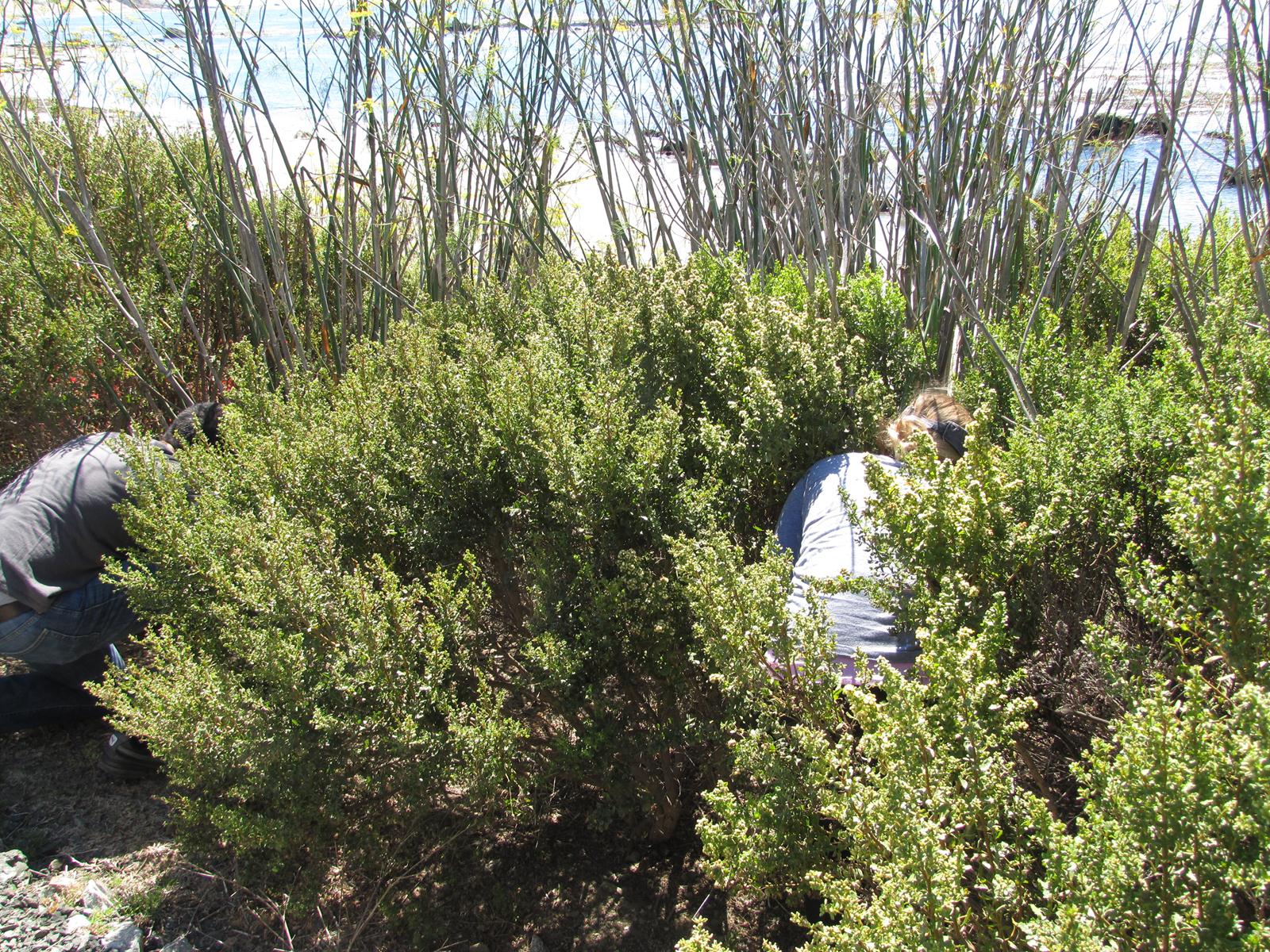
Students from Cuesta College in San Luis Obispo arrived with tools and energy to remove invasive fennel and thistles from the landscape along the boardwalk at Piedras Blancas. They did a bang-up job and the area looks wonderful. Thank you!
This was arranged by Carol and Phil Adams. Thanks to them for their continuing dedication.
Sunday, August 25, 2013
Youngsters arriving
As summer draws to a close, the young seals start arriving on the beach for their fall haul-out. The young of the year, last January's pups, return at this time, too. Several very small seals are already on the beach. They may be this year's pups, already successful at their first migration.
They co-exist comfortably with the adults and subadults on the beach. They may tussle with each other, but they don't pick on the kids.
Adults made their presence known from the water. This one kept raising his head out of the water and bellowing, as if challenging other males to come get him.
These two adult males are completing their molt, while the third above them already shows his 2013 skin.
They co-exist comfortably with the adults and subadults on the beach. They may tussle with each other, but they don't pick on the kids.
Adults made their presence known from the water. This one kept raising his head out of the water and bellowing, as if challenging other males to come get him.
Monday, August 12, 2013
Pelicans
A flock of pelicans dropped down out of the sky, gracefully landing on the water. They weren't actively feeding, diving from the air into the water, but there must have been something there to attract them.
They flapped around as if they were bathing, cleaning their feathers.
Some appeared to have fish in their bills.
And poking the water for fish.
Their wingspan is powerful. You can almost hear the whirl of their wings.
They flapped around as if they were bathing, cleaning their feathers.
Some appeared to have fish in their bills.
And poking the water for fish.
Their wingspan is powerful. You can almost hear the whirl of their wings.
Monday, August 5, 2013
More boys on the beach
Adult males enjoy the beach in August. They don't have much to do except let their skin peel off and rest.
This impressive male has a well-developed chest shield, indicating he's mature. They can live to 14 years but 12 is the prime breeding year.
New skin needs not additional treatment. Just peel off the old layer and the new is ready to wear. This experienced old guy has scars to show his years. Initially, I thought he had something on his head, but it's just light-colored old skin.
Lying around in a pile makes a good day at Piedras Blancas.
Subscribe to:
Posts (Atom)